I often think that you make discoveries just when you need them most. Words fall into your lap at a time that’s right for you. A time when they are the only words that will help you. These are the words that resonate with your soul. Words that speak to you long after they leave your lips.
Some years ago I was aimlessly flicking through a magazine, waiting for the hands on the clock to turn and wondering how I would move forward in my life.
I came across a short column all about new research that showed that looking after houseplants helped with low mood. I sat up a little straighter in my chair and read on. Nursing home patients that had been given a plant to look after had shown a marked improvement in their mood than those without a plant.
At that time my mood was definitely low and days were characterised by the black cloud above my head. The smallest of tasks seemed overwhelming and days stagnated into weeks.
My low mood told me that I was not capable, that everything was beyond my reach. Despite the lack of confidencein my abilities, I let the question swirl into the air: could I give this plant lark a try? I decided that a plant was a small thing and that I could manage that. Pleased I’d made a positive decision, I felt buoyed and searched the internet for the hardiest houseplants.
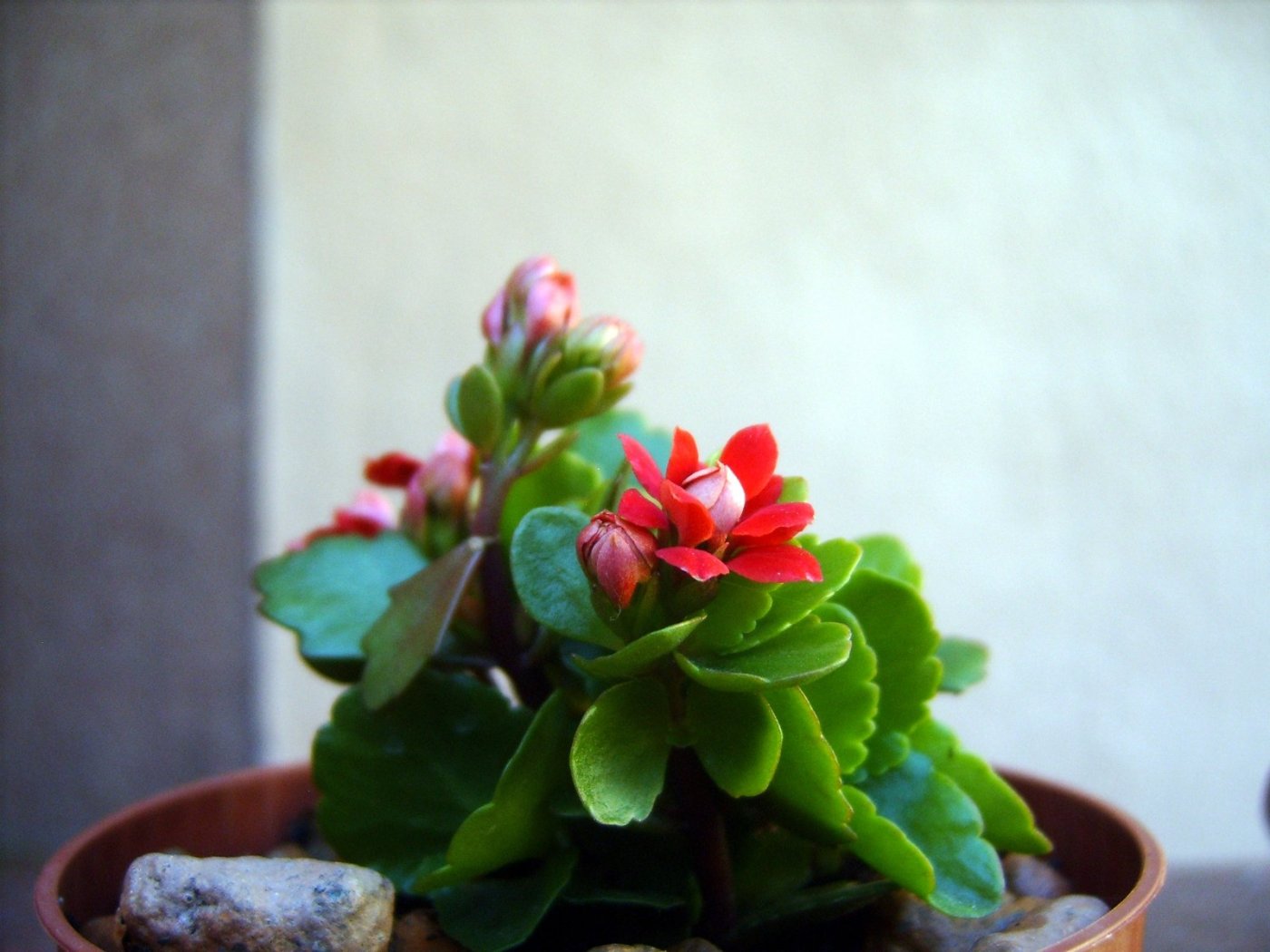
Some days later I brought home from the supermarket a small Kalanchoe plant that had cost only two pounds. The plant was not much larger than a boiled egg. It had tight glossy green leaves and a single bud. Cradling the new life in my hands, I placed the plant onto my bedroom windowsill so that I’d see it first thing in the morning and last thing at night.
Over the weeks, the plant afforded me a little responsibility. Silly though it may sound, I knew that the plant needed me.
Asking for no more than a sunny position and a little water, the plant began to flourish. I observed the taller stem and marvelled at the new leaves. I’d spend time checking the plant’s water levels, grinning like a loon at the openiing of one of the buds – bright cerise starbursts of wonder.
Despite my problems, I had to ensure the plant was watered so that it could continue to flourish. Day after day. And I was rewarded with flowers and a sense of achievement. I think it’s the same for those with pets; they force you to get up in spite of a low mood.
Within a year the plant had grown to six times its original size. Gently, alongside the slow budding of the plant, the roots of confidence began to push through the dank low mood that had plagued me for months. Taking root, this confidence breathed life back into my weary mind and I began to gain strength.
I learned that plants take time. Nature will not be rushed. She does not worry or try too hard, yet things that need to happen, happen. There was something comforting in that. Something about trusting in the process.
These days my living room is full of houseplants. Spider Plants trail the length of the deep windowsill in the living room, Peace Lillies stand tall on small tables and a miniature rose gifted to me by a friend provides sweet perfume when in flower. Parlsey and Lemon Basil fight for attention on my kitchen windowsill, next to a Christmas Cactus and a Venus Fly Trap. Even the bathroom houses plants; the small aloe plant flourishes in the humid environment and the ferns enjoy the shade.
My love for plants extends out into my south-facing back yard. Bees hover round fragrant Lavendar and butterflies alight from the colurful Cosmos, while Nemesia provides a honey scent as I brush past to hang out the washing on a sunny day.
In our technological and connected world, it’s easy to underestimate the power of the natural world on our wellbeing. But for those who have experienced the joy in cultivating new life, of nurturing plants, the natural world is a source of wonder, nourishment and gratitude. It is not an afterthought but a necessity for mindful living.
My advice for choosing a houseplant
Pick a hardy species:
- Ferns love shaded areas.
- Spider plants are happy in most places but like a little indirect sunlight.
- Peace lillies will flower in indirect sunlight.
- Cactus plants or aloe plants are very hardy and require minimal water.


Leave a Reply